 Skip to content

Woocommerce Vs Shopify: Key Differences And Benefits For Your Online Business
Millions of stores around the world rely on WooCommerce and Shopify to run their online businesses.
According to available data, 4.8 million Shopify stores and 6.2 million A WooCommerce store already operates on these platforms, which clearly shows their popularity and importance in the market.
While both offer e-commerce solutions, they differ in how they work and approach – Shopify is a fully managed platform, while WooCommerce is WordPress plugin.
Understanding these differences is crucial for any entrepreneur who wants to choose the most suitable solution for their online business.
It's worth noting that we at TrueFalseHosting offer the best hosting for Woo, which can be a significant advantage for those opting for WooCommerce.
Key items
- The two most popular e-commerce platforms have different approaches
- The choice depends on the needs, goals and technical level of the user
- Proper hosting can significantly improve the performance of an online store
In short: WooCommerce vs Shopify

When considered WooCommerce vs Shopify, the main difference lies in the amount of control versus simplicity. WooCommerce offers great flexibility in WordPress environment, but requires additional time and technical knowledge to set up. Shopify is a fully hosted platform that allows you to quickly launch a store without additional maintenance.
Comparison table:
| Characteristic | WooCommerce | Shopify |
|---|---|---|
| Price | Free plugin; | Plans from $5 per month; |
| Simplicity | Technical knowledge required | Intuitive, beginner-friendly |
| Adaptability | High, through themes and plugins | More limited, especially on lower plans |
| Hosting and domain | They are not included | Included in all plans |
| Themes and templates | Wider range through WordPress; | Large library of themes and drag-and-drop editing |
| Integrations | WordPress plugins and WooCommerce extensions | 8,000+ apps in the Shopify App Store |
For maximum control and freedom, WooCommerce is the logical choice, while Shopify appeals to those who value speed and simplicity. we offer quality hosting for WooCommerce, which makes it even easier to work with this platform.
Best suited to:
- WooCommerce: developers, marketers and companies who want complete control.
- Shopify: startups, solo founders and growth-stage brands.
Key factors when choosing an e-commerce platform
The right choice e-commerce platforms directly affects the success of the online store.
1. Price and cost structure
Shopify works through a monthly subscription that includes most of the key features. WordPress plugin, but costs are incurred through paid extensions, themes and maintenance.
- Shopify: predictable monthly expenses
- WooCommerce: flexible but variable costs depending on add-ons
| Platform | Billing model | Suitable for |
|---|---|---|
| Shopify | Monthly subscription | Users without technical knowledge |
| WooCommerce | Extensions and hosting as needed | More experienced users |
2. Integration with other tools
A good platform must connect with the key e-commerce tools and external applications. digital asset management software makes it easy to create and manage content.
3. Customization options
Customizing the look and functionality is key to branding. WordPress ecosystem.
4. Ease of use
Shopify is known for its simplicity and the fact that it's fully hosted, so users don't have to worry about maintenance and security updates.
5. Methods of payment
Both platforms support popular payment methods like PayPal and Stripe and have their own systems - WooPayments and Shopify Payments - which makes it easy to adapt to customer needs.
6. Scalability and performance
As the store grows, the platform has to handle more products and transactions. https://truefalsehosting.rs/ we offer WooCommerce optimized hosting with fast performance and stability.
7. AI and automation
Contemporary AI tools they are increasingly important for personalization, analytics and marketing automation.
When choosing a platform, match budget, technical skills and business goals with the possibilities of the chosen solution.
What is WooCommerce?
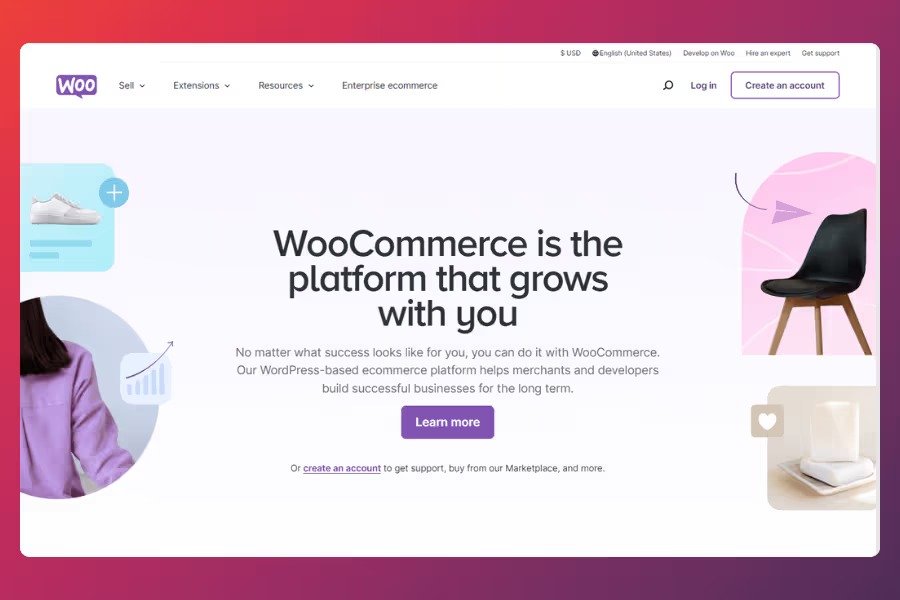
WooCommerce is free WordPress plugin which turns a classic WordPress site into a functional online store.
WooCommerce is especially useful for owners of existing WordPress sites because it does not require migration.
Advantages of WooCommerce:
- Free installation with a WordPress site
- Full customization design and functionality
- Rich plugin library (WordPress plugins and WooCommerce extensions)
- An active community and regular updates
The table below shows the key elements:
| Element | Description |
|---|---|
| Price | The basic plugin is free |
| Adaptability | Full control over appearance and functionality |
| Hosting | Quality required WooCommerce hosting |
| Support | Community + premium support options available |
For optimal performance it is recommended quality hosting. truefalsehosting.rs
WooCommerce is a flexible choice for small and medium-sized businesses that want to develop online sales without additional costs for basic functionality.
What is Shopify?
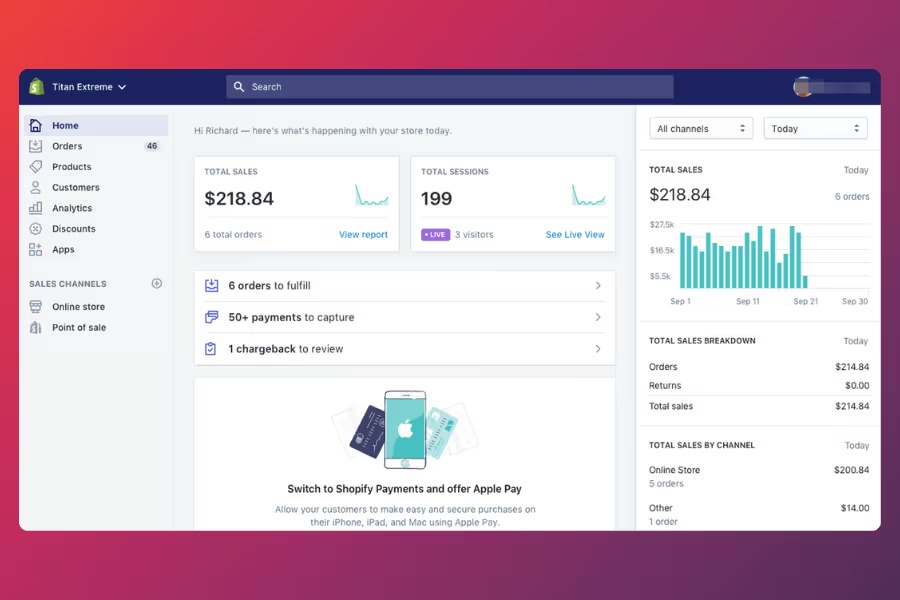
Shopify is a SaaS platform for e-commerce that enables quick start-up and management of an online store without additional installations and complex settings.
After registration, you choose pre-prepared templates and adapt them to your brand.
Shopify Plus is an advanced version aimed at larger companies brings greater scalability, advanced features and priority support, which is important for brands with high order volumes.
Shopify highlights:
- Fast startup: the store is functional immediately after registration
- Design customization: different themes in accordance with the visual identity
- Integrations via Shopify App Store: applications for dropshipping, marketing, CRM and others.
- Analytics and reports: detailed data on sales and customer behavior
Table: differences between the standard Shopify package and Shopify Plus:
| Characteristic | Shopify (Basic) | Shopify Plus |
|---|---|---|
| Scalability | Small and medium-sized shops | Big brands |
| Support | Standard | Dedicated and priority |
| Functionalities | Basic and advanced applications | Enterprise features |
| Price | Lower monthly fee | Higher monthly fee |
The combination of easy management, a rich selection of applications and the ability to scale makes Shopify a suitable solution for different types of businesses.
WooCommerce vs Shopify: Comparison
Functionalities
Both platforms offer a wide range of features, but differ in how they are delivered.
- WooCommerce is a plugin for WordPress and relies on an ecosystem of themes and plugins.
- Shopify is a fully hosted solution with a built-in drag-and-drop editor, native email tools (Shopify Email), social networking and headless commerce options.
Functionality comparison chart:
| Functionality | WooCommerce | Shopify |
|---|---|---|
| Free plan | Yes | No (3 day trial) |
| Hosting and domain | External | On |
| Native payment processor | WooPayments (Stripe) | Shopify Payments |
| SEO support | Yes (Yoast et al.) | Yes (built-in) |
| Drag-and-drop builder | No | Yes |
| Email integration | Through plugins | Yes (Shopify Email) |
| App Store | Yes (WordPress/Woo ecosystem) | Yes |
| Headless commerce | Limited | Yes |
Both platforms have high user ratings, showing that they are stable and reliable options.
Pricing plans
Shopify offers fixed packages with predefined functions. $5 per month, but is limited in terms of topics and collections.
WooCommerce is free to install, but additional costs should be taken into account:
- Domain: about 15 USD per year
- Hosting: average around 10-120 USD per year (for small and medium sites)
- Premium Themes: 20-100 USD per year (some are lifetime licenses)
- Add-ons (eg security): about $20 per month (optional)
WooCommerce may seem cheaper to start with, but the overall cost depends on the plugins and resources you choose.
Ease of setup and use
Shopify is in practice significantly faster to deploy because it comes as a fully hosted platform - the store is ready immediately after registration.
WooCommerce usually requires the following steps:
- Shopping domain and hosting
- Installing WordPress
- Adding a WooCommerce plugin
- Configuration of plugins and security options
Therefore, WooCommerce is better suited for those with technical knowledge or for teams who want full control, while Shopify is ideal for a quick start.
SEO performance

SEO depends from site speed, structure and product optimization.
- WooCommerce uses WordPress and plugins like Yoast SEO, which enables advanced blog optimization, product and meta data.
- Shopify it has built-in SEO tools and often loads faster thanks to an optimized, closed infrastructure.
Delivery methods
WooCommerce shipping:
- Fixed (flat rate) delivery
- Free shipping (e.g. by order value or location)
- Real-time courier rates via plugins (UPS, DHL, FedEx)
- Local delivery or personal collection
Shopify shipping:
- Automatic integrations with major couriers (Royal Mail, UPS, DHL)
- Shopify Shipping with discounts and label printing
- Fixed and free shipping
- Easy local pickup and delivery
Shopify has the advantage because the options are integrated and easier to set up, while WooCommerce offers more flexibility with additional technical setup.
Payment processors
Own systems:
- WooPayments (with Stripe account)
- Shopify Payments (works with main card processors)
Third party providers are also supported: PayPal, Square, Amazon Pay, Payoneer Checkout.
Fees:
- WooCommerce: typically 2.9% + $0.30 per transaction (US cards), with ~1% for international cards.
- Shopify: commissions vary by plan.
👉 More information: WooPayments and Shopify Payments.
Offline payment methods
- WooCommerce: checks, cash on delivery, bank transfers
- Shopify: cash in store, manual orders, etc.
Both platforms do not charge extra for offline methods.
Themes and customization

WooCommerce themes:
- Lots of free and premium options
- Full control over code and CSS
- Premium theme cost: $20-$100 per year
Shopify Themes:
- Fewer free themes
- Premium themes in Shopify Theme Store
- High level of optimization for mobile devices
- Less customization freedom compared to WooCommerce
Advanced users will appreciate the greater flexibility of WooCommerce, while Shopify offers simpler and faster implementation.
Integrations
Integrations are key to extending functionality.
- WooCommerce: WordPress plugins – Yoast SEO, Jetpack, Mailchimp, Google Analytics and many more.
- Shopify: own App Store with thousands of apps for marketing, dropshipping, CRM and analytics.
Examples of integrations:
- Payments: Stripe, PayPal, Square
- Marketing: Mailchimp, Klaviyo
- Analytics: Google Analytics, Facebook Pixel
- Support for multiple currencies: present on both platforms (easier setup on Shopify)
Shopify offers a centralized and secure infrastructure, while WooCommerce provides flexibility through a huge number of plugins.
Examples of online stores on WooCommerce and Shopify
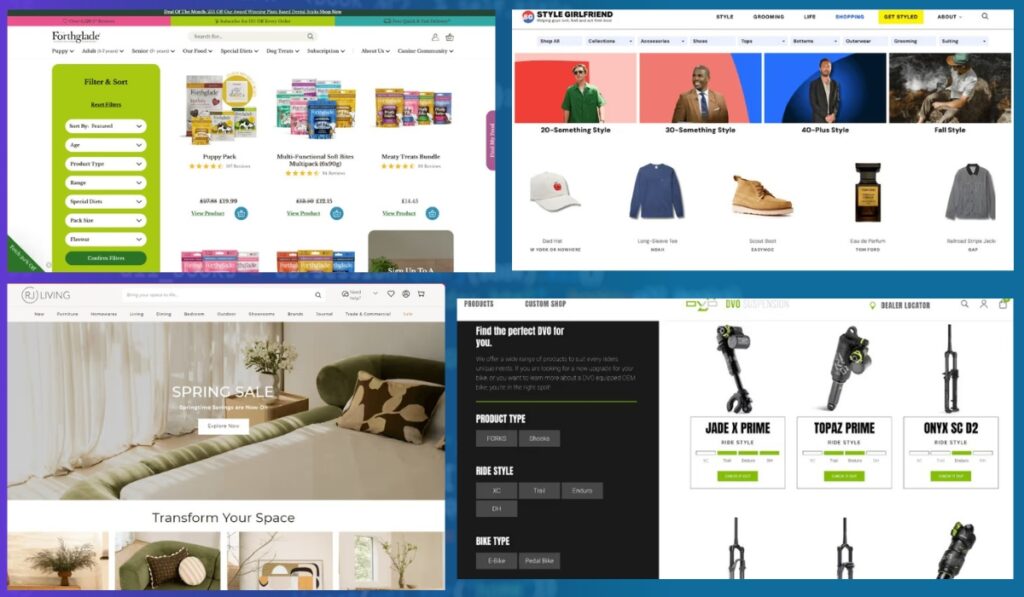
Various companies use WooCommerce and Shopify to develop their online stores.
- Forthglade - Shopify: Forthglade is a brand with over 50 years of experience in the production of natural dog food.
- RJ Living - Shopify: RJ Living is an Australian brand of modern furniture.
- Style Girlfriend - WooCommerce: Style Girlfriend offers personalized fashion recommendations for men.
- DVO Suspension - WooCommerce: DVO Suspension sells components for mountain bikes (shock absorbers and forks).
To start or improve a WooCommerce store, reliable hosting is crucial.
| Platform | Brand example | Industry | A key advantage |
|---|---|---|---|
| Shopify | Forthglade | Food for pets | Mobile optimization and integrations |
| Shopify | RJ Living | Furniture | Visual presentation of the product |
| WooCommerce | Style Girlfriend | Fashion and style | Flexibility through add-ons |
| WooCommerce | DVO Suspension | Cycling equipment | Independent construction of the store |
Which e-commerce platform to choose?
A choice between WooCommerce and Shopify it depends on priorities, budget and technical knowledge.
WooCommerce is a WordPress plugin that offers full control over features and design. requires hosting, accessories and regular maintenance.
Shopify stands out for its simplicity and quick start-up.
Comparison table:
| Characteristic | WooCommerce | Shopify |
|---|---|---|
| Starting price | Free plugin + hosting | Monthly subscription |
| Flexibility | Very tall | More limited |
| Maintenance | By hand | Automatically |
| Technical knowledge | Necessary | Minimally |
| Startup speed | Slower | Faster |
In addition to the platform itself, consider digital content management. e-commerce DAM Dash solutions make it easy to search, share and use visual material in marketing channels, which further improves brand presentation.
FAQs
Is WooCommerce better than Shopify for beginners?
Shopify is usually more suitable for beginners because it is fully hosted platform and requires no technical setup.
Do I need to know programming for WooCommerce?
It's not required, but it helps.
Can I switch from WooCommerce to Shopify later?
Yes. migration tools and applications which facilitate the transfer of products, customers and orders.
Is WooCommerce really cheaper?
It depends on the needs.TrueFalseHosting offers quality solutions with us
Which platform is better for SEO?
Both support SEO. fast loading and built-in SEO features, so it is also a strong candidate.
Can I use Shopify or WooCommerce if I already sell on Instagram or Amazon?
Yes.
Which platform scales better?
Shopify makes it easy to scale because the hosting is managed and resources automatically adjust to growth.
How is customer support different?
Shopify offers 24/7 support (live chat, email, phone).