

What is a domain and how does it work?
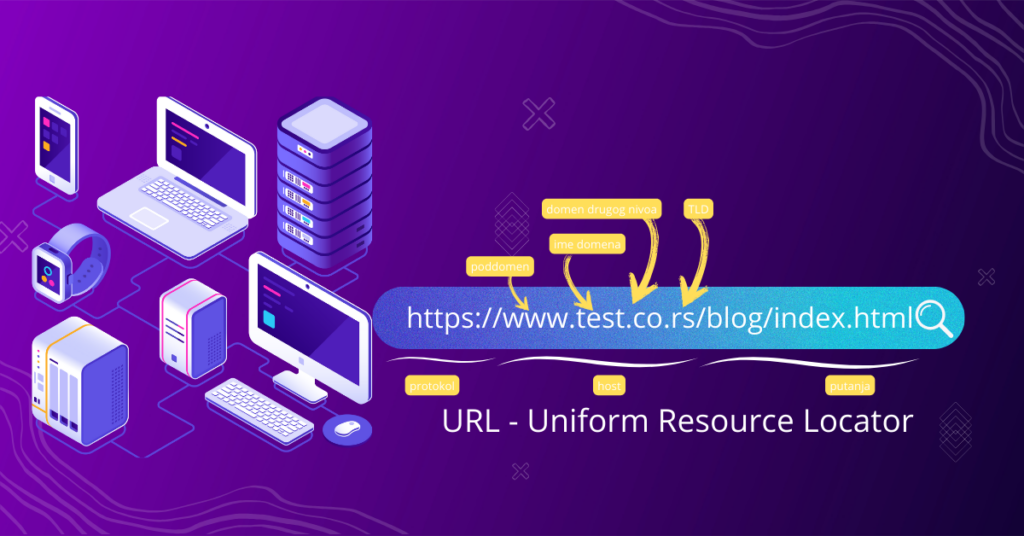
Domen je osnovna adresa vaše web stranice, koja omogućava korisnicima da vas pronađu na internetu. Umesto komplikovanih numeričkih IP adresa (koje izgledaju ovako: 192.168.0.1), koristi se lako pamtljiva adresa poput „www.vasasajt.rs“.
This address is linked to an IP address through DNS (Domain Name System), which allows the browser to know where to send users when they type your address into their browser.

.
How do domains work?
Domeni su ključni deo interneta jer predstavljaju način na koji identifikujemo web stranice. Kada unesete ime domena u pretraživač, sistem DNS-a prevodi naziv domena u IP adresu servera na kojem je sajt smešten. Na primer, kad neko ukuca „www.google.com“, DNS sistem pronalazi odgovarajuću IP adresu servera gde je Google hostovan i usmerava korisnika na pravi sadržaj.
DNS servers and their hierarchy
Važno je razumeti da DNS nije jedan server, već niz hijerarhijski organizovanih servera koji zajedno omogućavaju pretragu imena domena. Kada unesete ime domena, pretraga započinje od „root“ DNS servera, koji vodi do domena najvišeg nivoa (TLD), a potom do specifičnog DNS servera za taj domen. Ovaj proces traje samo nekoliko milisekundi i omogućava brz pristup sajtovima širom sveta.
Types of domains
There are several different types of domains, each with a role to play in the Internet ecosystem:
| Types of domains | Description |
| TLD (Top-Level Domains) | Najvišeg nivoa domeni kao što su „.com“, „.org“, „.net“, generalno dostupni širom sveta za poslovne svrhe. |
| ccTLD (Country Code Top-Level Domains) | Domeni povezani sa određenim državama, kao što su „.rs“ ili “.срб” za Srbiju, „.de“ za Nemačku, često korišćeni za nacionalno orijentisane web stranice. |
| gTLD (Generic Top-Level Domains) | Generički domeni kao što su „.info“, „.shop“, „.blog“, omogućavaju specifične svrhe ili interesovanja i postaju sve popularniji. |
Difference between TLD and ccTLD domains
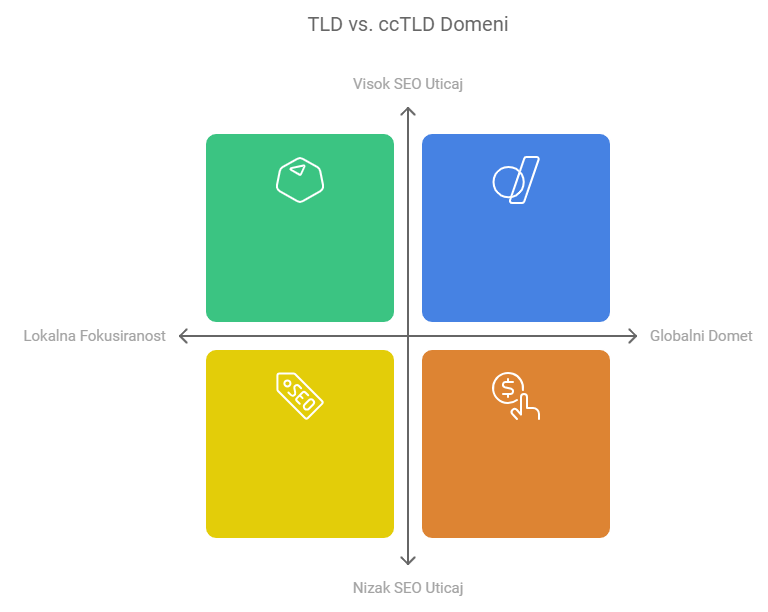
Jedna od ključnih razlika između TLD i ccTLD domena je svrha i publika kojoj su namenjeni. Dok TLD domeni kao što su „.com“ i „.net“ mogu biti korišćeni globalno, ccTLD domeni su idealni za kompanije ili organizacije koje ciljaju specifičnu geografsku lokaciju. Na primer, lokalne firme u Srbiji često koriste „.rs“ domen kako bi pokazale svoje prisustvo na domaćem tržištu.
Using a ccTLD can also improve local SEO, as search engines often favor domestic domains in search results.
New trends in domains
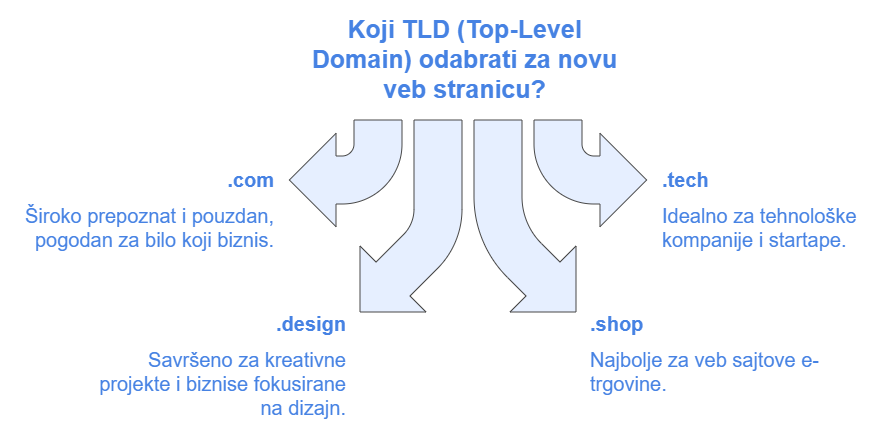
Poslednjih godina, broj novih TLD-ova značajno se povećao. Pojavili su se domeni poput „.tech“, „.design“, „.xyz“ i mnogi drugi koji omogućavaju veću fleksibilnost pri izboru imena. Ovi domeni su odlični za startape, specijalizovane usluge ili kreativne projekte. Na primer, „.shop“ je idealan za e-trgovinu, dok „.tech“ može da se koristi za tehnološke kompanije ili blogove.
Advantages of using new TLDs
Using new TLDs can be beneficial for several reasons:
| Advantages of using new TLDs | Description |
| Originality | New TLDs allow more options for creativity, it is easier to find a unique name that is not taken. |
| SEO optimization | New domains can signal to search engines the type of content you provide, improving specific searches. |
| Branding | Domains clearly signal the nature of your business, which can enhance branding |
How to Choose the Right Domain?

Choosing a domain can be challenging, but it is a crucial step in setting up an online presence.
1. Simplicity - Choose a simple name that is easy to remember and type.
2. Relevance – Domen bi trebalo da reflektuje svrhu ili temu vašeg sajta. Na primer, ako imate sajt za fotografiju, domen bi mogao da sadrži reč „foto“ ili „slika“. Ova strategija takođe može pomoći u SEO (optimizaciji za pretraživače).
3. Length – Short domains are usually better because they are easier to remember and type.
4. Izbegavajte specijalne znakove – Numbers, dashes and other special characters can make it difficult for users to remember the domain.
5. Trademark check - Before registering a domain, be sure to check whether the name is copyrighted or trademarked.
Domain and Hosting - What's the Difference?
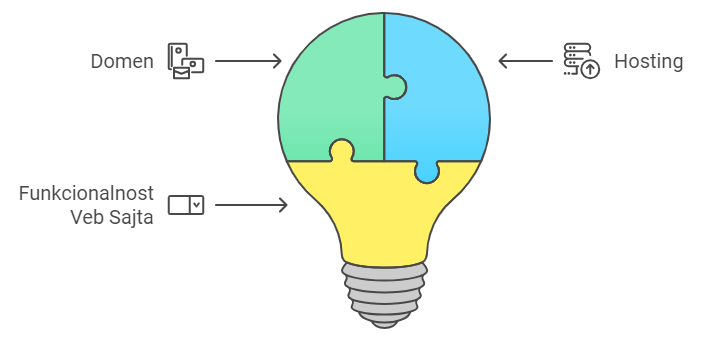
Many beginners confuse the terms domains and hosting, so it is important to clarify the difference.
Domen je samo ime ili adresa sajta (kao što je „www.vas-sajt.rs“), dok je hosting usluga koja omogućava da se podaci vašeg sajta čuvaju na serverima i budu dostupni korisnicima putem interneta. Hosting je prostor gde se čuvaju vaši tekstovi, slike, video zapisi i ostali sadržaji.
For example, a domain is like the address of your house, while hosting is the house itself. here.
Different types of hosting
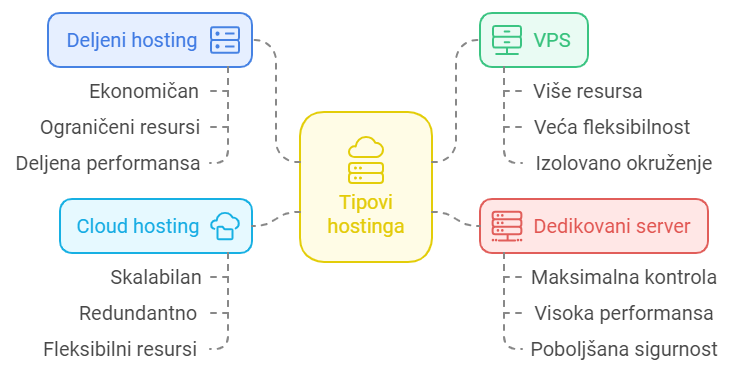
There are several types of hosting services that you can choose from depending on your needs:
1. Shared hosting: Više web sajtova deli isti server.
2. VPS (Virtualni privatni server): Pruža više resursa i fleksibilnosti od deljenog hostinga, jer korisnici imaju svoj „virtuelni“ deo servera.
3. Dedicated server: Cela mašina je posvećena samo vašem sajtu.
4. Cloud hosting: Uses a network of servers to maintain your site, allowing for greater flexibility and scalability, especially with high-traffic sites.
DNS - the Domain Name System
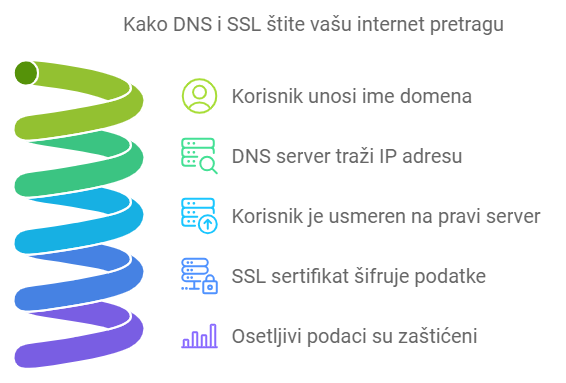
DNS is a basic part of the Internet infrastructure that connects the domain with the IP address of the server.
The DNS system works through a hierarchical series of servers that together help find the appropriate path to the desired site.
SSL certificates and the importance of security
SSL (Secure Sockets Layer) certificates have become the standard when it comes to internet security.
Tips for choosing and maintaining a domain
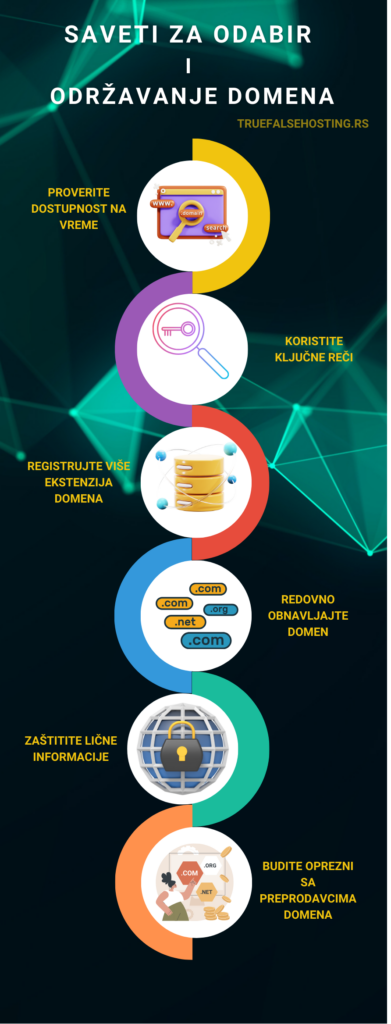
When choosing and managing a domain, the following tips can help you make the right decision and maintain your domain in the right way:
1. Check availability in time - Popular domain names get busy quickly, so it's important that as soon as you come up with a name, check its availability and register it as soon as possible.
2. Use keywords - If possible, include keywords relevant to your business in the domain name.
3. Register multiple domain extensions – If you can, consider registering multiple variations of your domain (eg .com, .rs, .net) to protect your brand and prevent competitors from using a similar name.
4. Renew your domain regularly - To avoid losing your domain, set a reminder or turn on automatic renewal.
5. Protect personal information - When registering a domain, your data may become publicly available.
6. Be careful with domain resellers - You are probably wondering how much does a domain cost?
Conclusion
A domain is a key element of online presence and a fundamental component of any successful website.
In addition to choosing the right domain, it's important to secure quality hosting and an SSL certificate to keep your site fast, reliable and secure.
Ultimately, a successful domain is more than just a name — it's a tool that allows you to connect with users and grow your business.