

What is Newsletter and how to use it
A newsletter is a digital form of communication, usually in the form of email, that is used to regularly inform a certain group of people.
The aim of the newsletter is to convey information about products, services, promotions, events or educational content in a personalized way.
The newsletter works by users voluntarily leaving their email addresses to become part of the subscriber list.
This strategy enables direct communication, encourages engagement and builds trust between the brand and its customers.
Purposes of Using the Newsletter
A newsletter is a powerful marketing tool for several reasons:
- Direct communication with clients: Unlike social networks, where messages can get lost in a sea of other posts, a newsletter allows your message to reach the user's inbox directly.
- Personalization of content: Using email marketing tools, you can tailor content to the specific interests and needs of your subscribers, increasing the likelihood of engagement.
- Strengthening relations with clients: Regular communication through the newsletter builds trust and reminds users of the value of your brand.
- Measurability of results: The newsletter allows you to track key metrics, such as email open rates, clicks and conversions, giving you concrete insights into the success of your campaigns.
Key benefits for business:
| An advantage | Description |
|---|---|
| Increase in sales | Newsletters are often used to promote new products, discounts or special offers, which can directly increase sales. |
| Keeping users engaged | Content that is educational and entertaining, like tips or interesting facts, keeps your audience engaged and interested in your brand. |
| Building brand recognition | Regularly sending newsletters with quality content creates a positive impression of your brand and contributes to its visibility on the market. |
| Effective and economical marketing | Compared to other marketing channels, sending a newsletter is cheap and at the same time allows you to reach a large number of people. |
Creating an Effective Newsletter
Before you start creating your newsletter, the key step is to identify your target audience.
- Who are your ideal users?
- What are their interests and problems that you can solve?
- How can your offer contribute to their daily life or business?
These are all questions that can lead you to answers that can open up new perspectives.
In order to successfully create and send a newsletter, you need to have a quality one hosting for your website, because it ensures the stability and loading speed of opt-in forms and other elements.
Setting goals for your newsletter
Goals allow you to track performance and adjust your strategy.
- Information: Sharing news, updates or useful information from your industry.
- Increase in sales: Using the newsletter to promote products, discounts or special offers.
- Audience education: Creating content that helps your users better understand your products or services.
- Increase in site traffic: Inclusion of links that link to your blog posts, products or special pages.
Collecting email addresses the right way
For a successful newsletter, you need a quality database of email addresses of users who are interested in your content.
- Opt-in forms: Place the form on your website, blog or social media pages.
- Value proposition: Give users a reason to sign up, such as free guides, discounts, exclusive content, or access to webinars.
- Integration on different channels: Include the possibility of registration in offline and online environments - at fairs, conferences or when shopping.
- Respect for the law: Follow the privacy policy and ensure user consent to receive emails.
Planning and structuring content
A good newsletter should be well organized and structured in order to be easy to read and attractive.
- Title: A short, clear and catchy subject line that encourages email opens.
- Content: Focus on valuable and relevant information that solves a customer's problem or provides added value to them.
- Length: Avoid information overload;
- Call to Action (CTA): Clearly communicate what you want the user to do – visit your site, read a blog, download content or buy a product.
The importance of the visual design of the newsletter
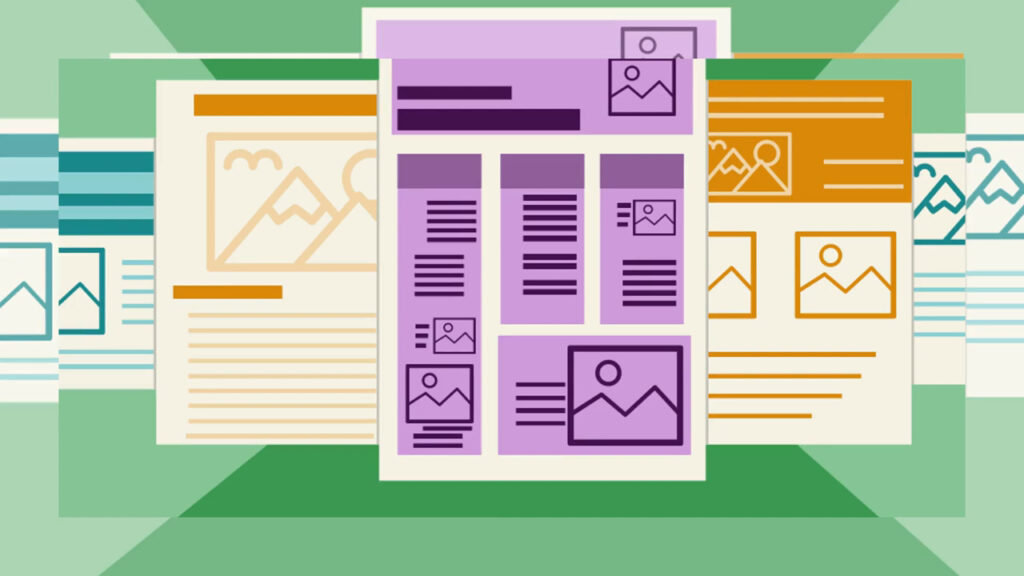
The visual aspect of the newsletter plays a key role in attracting attention and engaging users.
- Simple design: Use a minimalist approach with a clear hierarchy of information.
- Adaptability for mobile devices: Ensure that the newsletter looks equally good on phones, tablets and computers.
- Colors and fonts: Align the design with the visual identity of your brand.
- Visual elements: Include images, infographics or videos to break up the monotony of text and make the content dynamic.
- CTA buttons: Design prominent and visually appealing calls to action that clearly lead users to the desired action.
Rules for Sending Newsletters
Compliance with anti-spam rules is key to building trust with your subscribers and to preserve your reputation as a sender.
| The rule | Description |
|---|---|
| User consent | Ensure that all users have given their consent to receive the newsletter. |
| Authentic email address | Use a professional and recognizable email address that clearly shows who the sender is. |
| Relevant content | Avoid sensational headlines and content unrelated to the user's interests. |
| Correct frequency | Don't send newsletters too often, as this can irritate users and encourage them to mark you as spam. |
| Technical optimization | Follow technical email guidelines (such as SPF, DKIM and DMARC) to ensure your messages pass spam filters. |
Call to Action (CTA)
A call to action (CTA) is a key element of any newsletter that directs the user to the next step.
- A clearly defined goal: Before creating a CTA, be clear about what you want users to do – buy a product, download a guide, sign up for an event, or read a blog.
- Simplicity and directness: Use clear and direct language that leaves no room for misunderstanding.
- Urgency and relevance: Add a sense of urgency to encourage users to take immediate action.
- Visual prominence: The CTA should stand out from the rest of the content visually, using contrasting colors, a larger font or attention-grabbing buttons.
- Personalization: If possible, tailor the CTA to the user's interests.
- Positioning in content: Place the CTA where it will be easily seen.
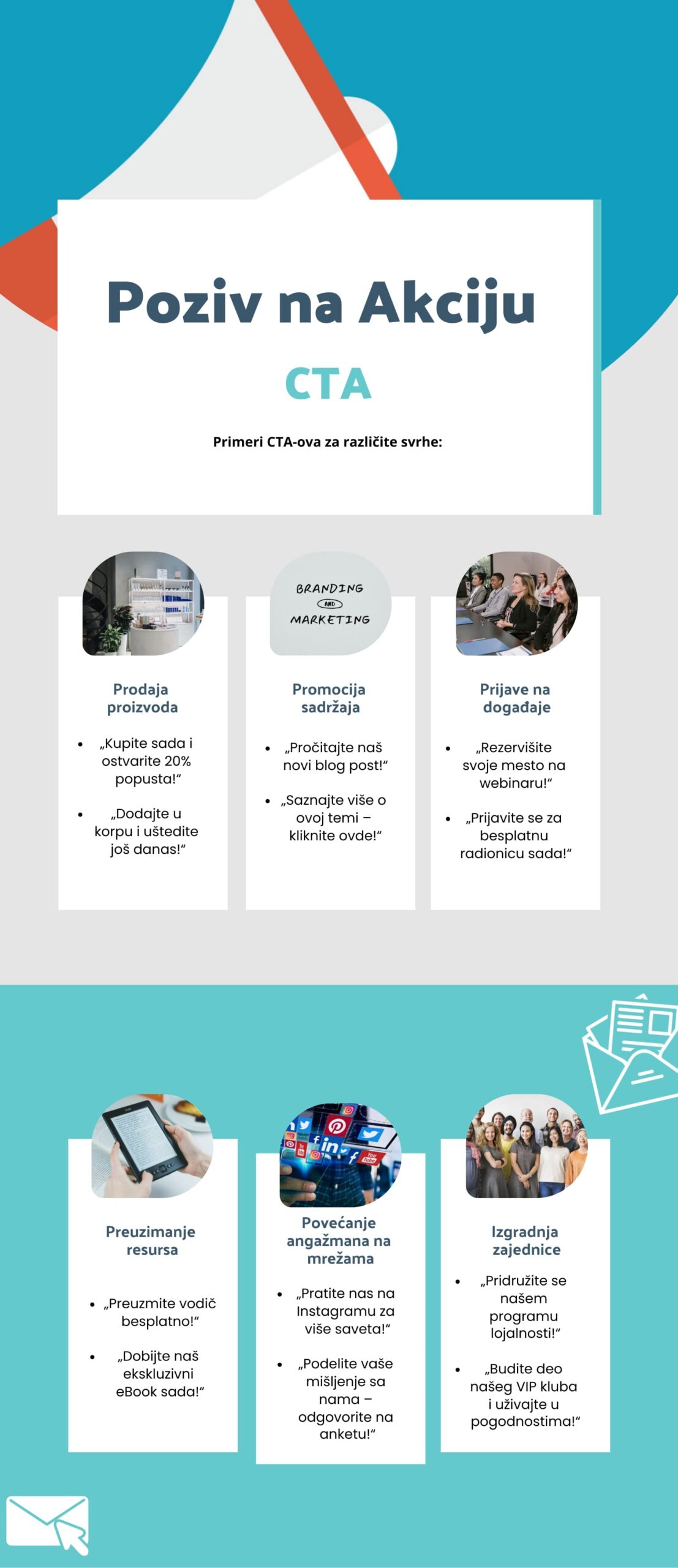
Here are some examples of CTAs for different purposes, which can serve as inspiration:
Conclusion
A properly designed and structured newsletter not only informs users but also encourages their loyalty and interest in your brand.