 Skip to content

How to buy a domain and what to pay attention to
Buying a domain can be a crucial step in building an online presence, but it can also cause a number of dilemmas. Understanding the basic terms and procedures of purchasing can make the entire process significantly easier.
After the domain is purchased, it is important to know what to do next to ensure the functionality and success of the site.

Key points
- Understanding the basic concepts is key to understanding the domain
- The process of buying a domain can be easily followed.
- Important information is available for post-purchase activities.
Basic terms
Understanding the basic terms related to domains can make the buying and management process much easier. domain types and the importance of choosing the right domain name.
What is a domain?
A domain is a unique network address which identifies a web page on the Internet. domain name and extension. Na primer, u adresi „www.truefalsehosting.rs“, „truefalsehosting“ je ime domena, dok je „.rs“ ekstenzija.
A domain allows users to easily find specific content, rather than having to remember numeric IP addresses.
Types of domains
There are several types, the most famous of which are:
| Domain level | Description | An example |
|---|---|---|
| Top-level domains (TLD) | Extensions at the top of the domain hierarchy usually include generic and national extensions. | .com, .org, .net, .rs |
| Second level domain | The domain under the TLD. | „domen“ u „domen.com“ |
| Subdomain | Part of the main domain, often used for specific sections of the site. | „blog.domen.com“ |
Each type of domain has specific purposes and uses.
The importance of choosing the right name
Choosing a domain name can affect brand recognition and SEO.
The domain should contain relevant keywords that reflect the purpose of the site.
Likewise, for the Serbian market, it is always better to choose one of national domains, poput „.rs“; „in.rs“; „co.rs“, jer je ključni koraka za uspešno digitalno prisustvo na domaćem tržištu.
Purchase procedure

Buying a domain is the first step in the process of creating a website.
Register selection
The first step in the buying process is choosing the right register.
It is recommended to check:
- Price registrations and renewed prices
- Support to users - availability and reactions
- Additional services like hosting
Popular registrars include GoDaddy, Namecheap, and Doola.
Check availability
After selecting the registry, the next step is to check the availability of the desired name.
It is important to consider:
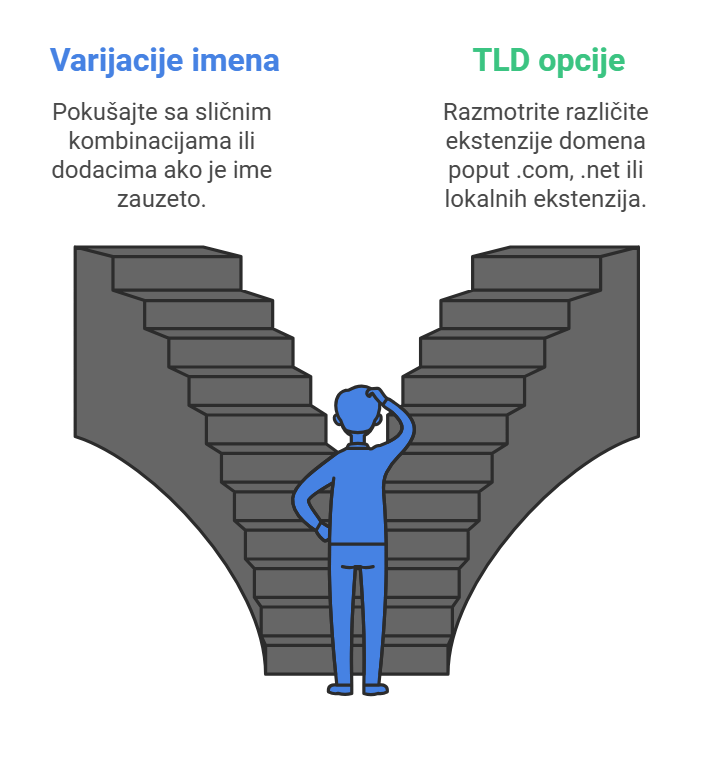
By checking the availability, the user can ensure the uniqueness and relevance of the name.
Registration
When an available name is found, the user proceeds to the registration itself.
The basic steps include:
- Information entry about the registrant
- Choosing the length of the registration (most often 1 to 10 years)
- Payment through a certain method
After successful registration, the registrant receives confirmation and access to the domain settings.
What after the purchase?

It is important to get all the necessary aspects right to ensure its effective use.
Setting up DNS records
Setting up DNS records is key to traffic routing to the site.
In order for the user to be able to find the site, it is necessary to set MX records in order to enable email communication. servers about where to deliver emails directed to that domain.
All these entries can be configured in the registry control panel.
Privacy protection
Many registries offer a privacy protection service to hide domain owner information from the public.
Deciding to use privacy protection can prevent spam and junk mail.
Depending on the registry, this option may be free or charged as an additional service.

Basic privacy protection
Includes:
- Hiding the name of the owner.
- Replacement of personal contact data with generic registrar data.
- Basic spam and spam protection.
- Availability: In some cases it is free and comes as part of the basic domain registration.
Additional privacy protection
Includes:
- Protection against targeted selling or misuse of data by third parties.
- Additional data encryption or domain activity hiding service.
- Additional options, such as anonymous domain registration or protection against domain theft (Domain Locking).
- Availability: It is usually charged as an additional service, and the price may vary depending on the registrar.
Maintenance and renewal
Domains are usually purchased, that is
Users can set renewal reminders.
Apart from renewal, regularly checking the domain's search engine performance is also important.
Frequently Asked Questions
What are the basic steps for buying an internet domain?
The first step in purchasing a domain name involves researching the availability of the desired name.
What should you pay attention to when choosing the right domain name?
When choosing a domain name it is important to keep it short, easy to remember and relevant to the content offered.
How to properly evaluate the value of a domain before buying?
The value of a domain can be assessed based on several factors, including the length of the name, keyword popularity, age and its past usage.
What are the most important factors that affect the price of a domain?
The price may depend on the extension (.com, .net, etc.), market interest, earlier registration and its usage.
What are the pros and cons of registering a domain with different registrars?
Some registries offer lower prices, while others provide additional services such as privacy or support.
How to protect your domain after you register it?
For protection after registration, it is recommended to use the private registration option, activate two-factor authentication and renew registration regularly.